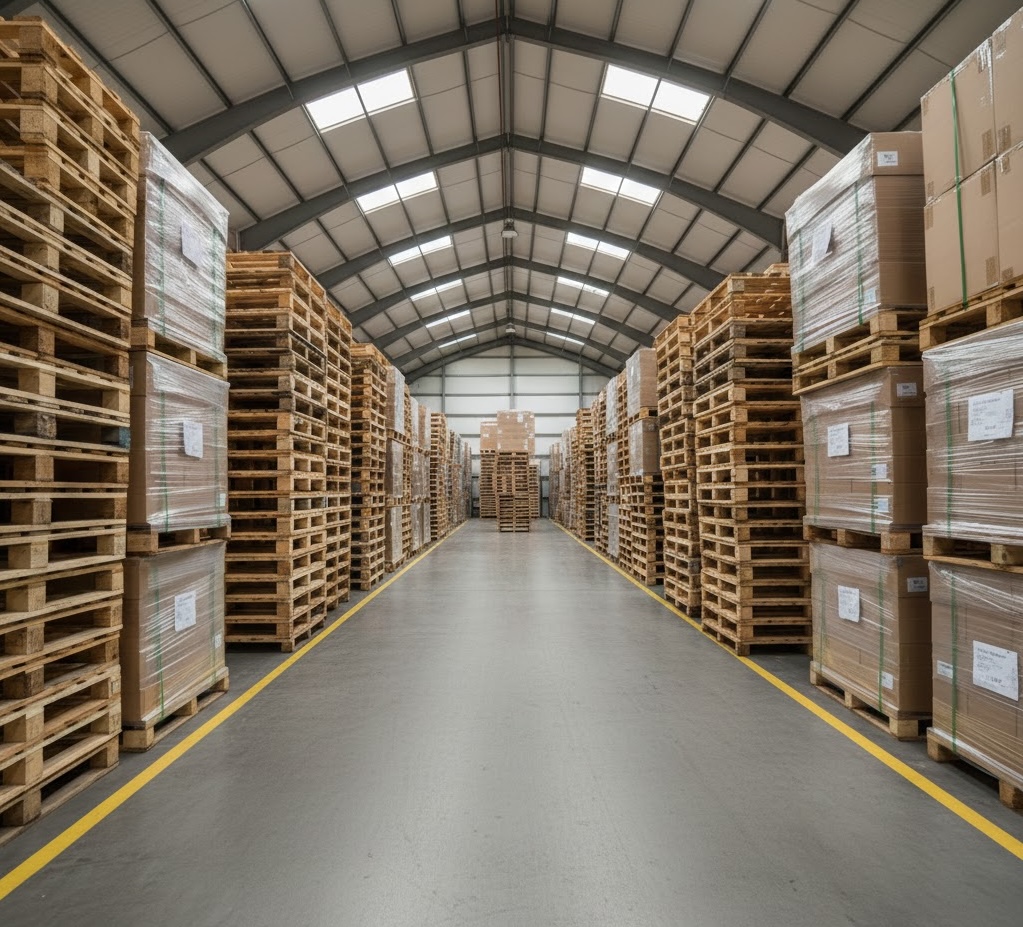
Grade B Pallets
Standard quality for everyday operations
Get a Free Quote
Fill out the form below and we'll get back to you within 24 hours
The Workhorse of the Pallet World
Grade B pallets represent the sweet spot in the pallet market—where quality meets affordability. These pallets have been previously used but maintain their structural integrity and load-bearing capabilities. With approximately 70-85% of their original life remaining, Grade B pallets deliver exceptional value for businesses seeking reliable performance without the premium price tag of new pallets.
Each Grade B pallet undergoes rigorous inspection to ensure it meets our quality standards. While they may show cosmetic wear such as minor staining, weathering, or board discoloration, these imperfections don't compromise functionality. In fact, many warehouse managers prefer Grade B pallets because they're proven performers—already broken in and stabilized from their initial use cycles.
Industry statistics show that Grade B pallets account for nearly 60% of all pallet transactions in the United States, making them the go-to choice for distribution centers, manufacturing facilities, and logistics operations. Their reliability, combined with cost savings of 40-60% compared to new pallets, makes them an intelligent choice for operations where appearance is secondary to performance.
Our Grade B inventory is constantly refreshed, sourced from reputable companies with well-maintained pallet programs. This means you're getting pallets that were cared for during their first life cycle, not abused or neglected units that barely pass inspection standards.
Grade B Specifications
- Minor cosmetic wear and weathering
- All boards present and secure
- No major structural damage
- May have minor staining
- Repaired pallets included
- Full load-bearing capacity
Detailed Technical Specifications
| Load Capacity (Static) | 4,000 - 5,500 lbs |
| Load Capacity (Dynamic) | 2,500 - 3,000 lbs |
| Board Condition | 80-95% intact, minor repairs acceptable |
| Moisture Content | 14-19% (kiln dried equivalent) |
| Stringer Condition | Solid, no splits exceeding 1/3 depth |
| Missing Boards | None (all positions filled) |
| Loose Boards | Maximum 1-2 per pallet (must be repairable) |
| Protruding Nails | None allowed (all secured) |
| Expected Lifespan | 3-7 years (depending on usage) |
| Rotation Cycles Remaining | 15-30 cycles (estimated) |
| Recycled Content | 100% (previously used) |
| Repair Rate | 20-40% include professional repairs |
Ideal Applications
Grade Comparison Matrix
| Feature | Grade A | Grade B | Grade C |
|---|---|---|---|
| Condition | Premium | Standard | Economy |
| Price Range | $$$ | $$ | $ |
| Typical Lifespan | 5-10 yrs | 3-7 yrs | 1-3 yrs |
| Cosmetic Quality | Excellent | Good | Fair |
| Best Use Case | Display, Export | Warehousing | One-way Ship |
| ROI Timeline | 12-18 mo | 6-12 mo | 3-6 mo |
| Repair Needs | Rare | Occasional | Frequent |
Available Sizes
ROI Calculator: Grade B Investment Analysis
Scenario: 1,000 Pallet Purchase
That's a 41.7% cost reduction with minimal performance trade-off!
3-Year Total Cost of Ownership
Compare to Grade A 3-yr cost: $22,680
Total Savings: $4,305
Break-Even Analysis
Compared to new pallets
Avg. vs premium grade
Immediate value
Customer Success Stories
Milwaukee Distribution Co.
Warehousing & Logistics
"We switched to Grade B pallets for our warehouse operations and saved $45,000 in the first year alone. The quality is outstanding—we've had virtually zero failures. These pallets handle our 2,800 lb loads without any issues."
Great Lakes Manufacturing
Industrial Equipment
"Grade B pallets are perfect for our manufacturing floor. They're durable enough for repeated use and look professional enough for our shipping department. The cost savings allowed us to expand our pallet pool by 40%."
Badger State Foods
Food Distribution
"We were skeptical about used pallets for food distribution, but Grade B quality exceeded expectations. They're clean, solid, and pass all our safety inspections. We're now standardizing on Grade B across all facilities."
Industry-Specific Recommendations
Warehousing & Storage
Grade B pallets are the industry standard for warehouse operations. With proper racking systems, they provide years of reliable service at the best price point.
Recommended Specs:
- • Standard 48×40 GMA size
- • 4-way entry for forklift access
- • Minimum 2,500 lb dynamic load
- • Regular inspection every 6 months
Manufacturing
Perfect for production lines and work-in-progress staging. Grade B pallets withstand the rigors of manufacturing environments while keeping costs manageable.
Best Practices:
- • Use block pallets for heavy machinery
- • Implement color-coding system
- • Rotate stock to extend lifespan
- • Keep staging areas dry and clean
Distribution Centers
High-velocity distribution operations benefit from Grade B reliability without the new pallet premium. Ideal for cross-docking and regional distribution.
Optimization Tips:
- • Match pallet size to truck dimensions
- • Establish repair program for damaged units
- • Track pallet lifecycle metrics
- • Consider pooling program participation
Retail Operations
Back-of-house storage and receiving areas are perfect applications. Grade B pallets provide professional appearance while maintaining budget control.
Retail Applications:
- • Stockroom organization
- • Receiving dock operations
- • Seasonal merchandise storage
- • Vendor direct deliveries
Quality Standards & Inspection Process
Our 12-Point Inspection Protocol
Structural Integrity Check
All stringers and blocks verified for cracks, splits, or damage
Board Count Verification
Ensure all deck boards are present and properly positioned
Fastener Inspection
Check nails/screws for security, remove or re-drive protruding fasteners
Load Surface Assessment
Verify top deck provides stable, level loading surface
Bottom Board Check
Inspect bottom boards for support and forklift entry clearance
Dimensional Accuracy
Confirm pallet meets specified size within tolerance (±1/8")
Moisture Content Test
Random sampling to ensure 14-19% moisture content
Repair Quality Review
Verify any repairs meet industry standards and are secure
Contamination Screening
Check for chemical spills, excessive staining, or foreign materials
Fork Entry Verification
Ensure adequate clearance for 4-way forklift access
Load Test Sampling
Random pallets tested to 3,000 lbs for quality assurance
Final Grading
Overall condition assessment and grade classification
Industry Certifications & Standards
Member of National Wooden Pallet & Container Association
Pallet Design System certified grading protocols
Compliance with international pallet standards
Care & Maintenance Guidelines
Extending Pallet Lifespan
Proper Storage
Store pallets in covered, dry areas when not in use. Avoid prolonged exposure to rain, snow, or direct sunlight. Stack empty pallets no more than 10 high to prevent warping.
Load Distribution
Center loads on the pallet and distribute weight evenly. Avoid concentrated loads that stress individual boards. Keep load within rated capacity (2,500-3,000 lbs dynamic).
Handling Best Practices
Insert forks fully into pallet openings. Lift straight up—don't drag or push at angles. Avoid dropping pallets or hitting rack uprights during placement.
Regular Rotation
Implement FIFO system to ensure even wear across your pallet fleet. Rotate pallets from high-stress applications (shipping) to lower-stress uses (storage) as they age.
When to Repair vs. Replace
REPAIR - Worth Fixing
- • 1-2 damaged or loose deck boards
- • Single broken stringer (remaining structure intact)
- • Missing fasteners or protruding nails
- • Minor cracks less than 1/3 stringer depth
- • Overall condition still Grade B quality
Repair cost: $3-8 per pallet
REPLACE - Too Damaged
- • Multiple broken stringers or blocks
- • More than 3 missing or broken deck boards
- • Severe warping affecting load stability
- • Deep cracks compromising structure
- • Contamination with chemicals or mold
Replacement cost typically lower than extensive repairs
Preventive Maintenance Schedule
Visual inspection during use - remove damaged pallets from rotation
Sort inventory - identify pallets needing repair or replacement
Deep cleaning and comprehensive condition assessment of fleet
Full fleet audit - retire end-of-life pallets, refresh inventory
Ready to Optimize Your Pallet Costs?
Grade B pallets deliver the perfect balance of quality and value. Get a customized quote today.
Most orders ship within 48 hours • Volume discounts available • Free delivery on orders $500+