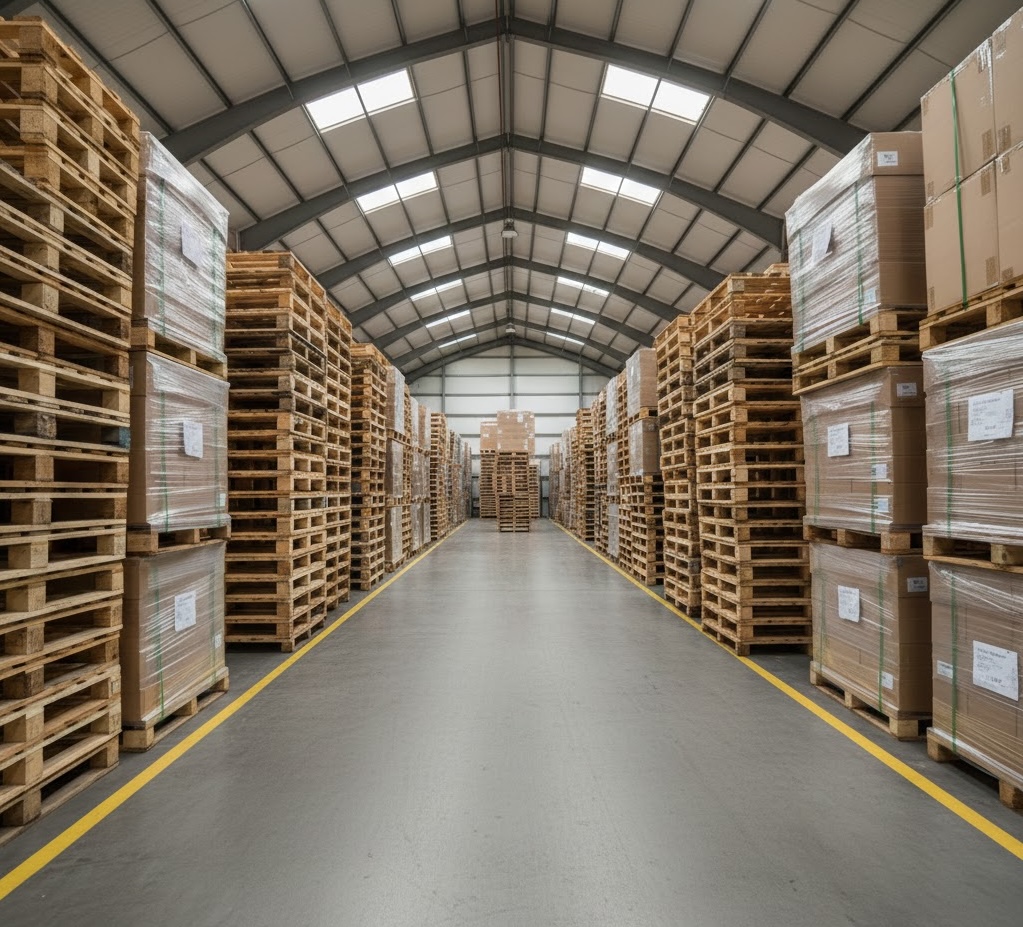
Pallet Care Guide
Maximize the life of your pallets
Get a Free Quote
Fill out the form below and we'll get back to you within 24 hours
Extend Pallet Lifespan by 2-3x with Proper Care
Proper pallet care can dramatically extend service life, reduce replacement costs by 40-60%, and improve safety. This comprehensive guide covers storage, handling, maintenance, and troubleshooting to help you maximize your pallet investment and reduce operational costs.
The Impact of Proper Pallet Care
Storage Best Practices
1. Keep Pallets Dry and Covered
Moisture is the #1 enemy of wood pallets. Wet pallets deteriorate 3-5x faster and are prone to mold, rot, and structural weakening.
✅ Do This:
- • Store in covered warehouse or shed
- • Use tarps for temporary outdoor storage
- • Ensure roof doesn't leak onto pallet stacks
- • Keep away from sprinkler systems
- • Monitor humidity levels (ideal: 40-60%)
❌ Avoid This:
- • Leaving pallets uncovered outdoors
- • Storing near water sources or drains
- • Placing against exterior walls where condensation forms
- • Using in wet conditions without drying
2. Elevate Off the Ground
Ground contact promotes moisture absorption, pest infestation, and premature decay. Elevation extends pallet life by 50-100%.
Elevation Methods:
- • Plastic sheeting: Minimum 6 mil thickness, cheapest option
- • Concrete blocks: 4-6" height, stable and durable
- • Dunnage racks: Commercial solution, excellent airflow
- • Sacrificial pallets: Use damaged pallets as base layer
3. Ensure Proper Ventilation
Air circulation prevents mold growth, reduces moisture buildup, and maintains wood integrity.
4. Stack Properly and Safely
Proper stacking prevents damage, ensures stability, and maximizes storage space.
Stacking Guidelines:
- • Maximum height: 15 pallets (or 8-10 feet)
- • Alignment: Stack perfectly aligned to prevent toppling
- • Condition: Same grade/condition in each stack
- • Size: Don't mix different sizes in one stack
- • Base: Use most stable pallets at bottom
- • Location: Away from high-traffic areas
- • Securing: Use banding for stacks over 10 high
- • Inspection: Check stack stability regularly
Seasonal Storage Tips
❄️Winter (Nov-Mar)
- • Allow pallets to acclimate 24 hours before loading
- • Watch for condensation from temperature changes
- • Increase ventilation to prevent moisture buildup
- • Check for ice damage on outdoor stacks
- • Snow and ice accelerate deterioration - keep covered
☀️Summer (Jun-Aug)
- • Increased humidity promotes mold - enhance ventilation
- • Direct sunlight causes warping - use covers
- • Pests more active - inspect regularly
- • Wood expansion in heat - allow for spacing
- • Outdoor storage deterioration accelerates 2-3x
Handling Best Practices
🚜Forklift Operations
- Insert forks fully under the pallet - minimum 75% of stringer length
- Lift evenly - tilting loads causes stress and board breakage
- Travel with forks lowered to 6-8 inches above ground
- Never exceed rated capacity - standard pallets: 2,500 lbs dynamic load
- Approach pallets squarely - angled insertion damages stringers
- Lower loads slowly - dropping damages both pallet and product
🛒Pallet Jack Usage
- Ensure wheels are in good condition to prevent jarring
- Insert forks completely before lifting
- Avoid dragging loaded pallets - causes deck board failure
- Navigate carefully around corners - side stress damages pallets
- Don't overload - most jacks rated for 5,000 lbs but pallets may be less
👷Manual Handling
- Wear gloves - protect against splinters and rough wood
- Lift with legs, not back - team lift for pallets over 50 lbs
- Check for protruding nails before handling
- Never drag pallets across concrete or asphalt
- Inspect pallets before moving - don't use damaged ones
- Use proper grip points - stringers or blocks, not deck boards
Inspection & Maintenance
Regular Inspection Checklist
Implement a routine inspection program to catch issues early. Regular inspections reduce catastrophic failures by 80% and extend pallet life significantly.
✅ Good Condition Indicators
- • All deck boards intact and secure
- • Stringers/blocks free from cracks
- • No protruding nails or fasteners
- • Boards firmly attached, no gaps
- • No excessive staining or contamination
- • Pallet sits flat without wobbling
- • No mold, rot, or insect damage
❌ Problem Indicators
- • Broken, cracked, or missing boards
- • Cracked or split stringers/blocks
- • Nails protruding more than 1/4"
- • Loose boards that move when pressed
- • Heavy staining or chemical spills
- • Warping, twisting, or uneven surface
- • Mold growth or soft/punky wood
Repair vs. Replace Decision Matrix
Repair
- • 1-2 broken deck boards
- • Loose fasteners
- • Minor splits (not through stringers)
- • Protruding nails only
- • Cost: $4-8 per pallet
- • Turnaround: 5-10 minutes
Evaluate
- • 3 broken deck boards
- • Minor stringer cracks
- • Extensive staining
- • Warping under 1/2"
- • Compare repair vs. replacement cost
- • Consider remaining lifespan
Replace
- • Broken stringers/blocks
- • 4+ broken deck boards
- • Severe warping (over 1/2")
- • Mold or rot present
- • Heavy contamination
- • Pallet over 10 years old
💡 Rule of Thumb: If repair cost exceeds 60% of replacement cost, replace the pallet
Common Mistakes to Avoid
❌Storing pallets outdoors without protection
Impact: Reduces lifespan by 50-70%. Moisture causes rot, mold, and structural weakness within months.
✅ Solution: Store in covered area or use heavy-duty tarps. Elevate off ground and ensure drainage.
❌Overloading pallets beyond rated capacity
Impact: Causes structural failure, product damage, and safety hazards. 60% of pallet failures are overload-related.
✅ Solution: Verify load capacity (typically 2,500 lbs dynamic). Distribute weight evenly. Use heavier-duty pallets for heavy loads.
❌Ignoring protruding nails and splinters
Impact: Creates safety hazards (puncture wounds), damages products, and violates OSHA regulations.
✅ Solution: Daily inspection program. Remove dangerous pallets immediately. Repair minor issues promptly.
❌Mixing pallet sizes in operations
Impact: Reduces efficiency, increases handling time 20-30%, causes equipment compatibility issues.
✅ Solution: Standardize on 48x40" GMA pallets. Keep different sizes separate if unavoidable.
❌Using damaged pallets for valuable products
Impact: Product damage costs 10-50x more than pallet replacement. Creates liability issues.
✅ Solution: Grade pallets by condition. Use Grade A for high-value items, Grade C only for one-way shipping.
❌Dragging pallets across rough surfaces
Impact: Accelerates wear by 5-10x. Damages deck boards and can weaken structure.
✅ Solution: Always use forklifts or pallet jacks. Train staff on proper handling techniques.
Annual Cost Savings from Proper Care
Without Proper Care
With Proper Care
Need Professional Pallet Services?
From repairs to replacement, we can help you optimize your pallet program and reduce costs