Wood Pallets
Traditional strength and reliability
Get a Free Quote
Fill out the form below and we'll get back to you within 24 hours
The Industry Standard for Material Handling
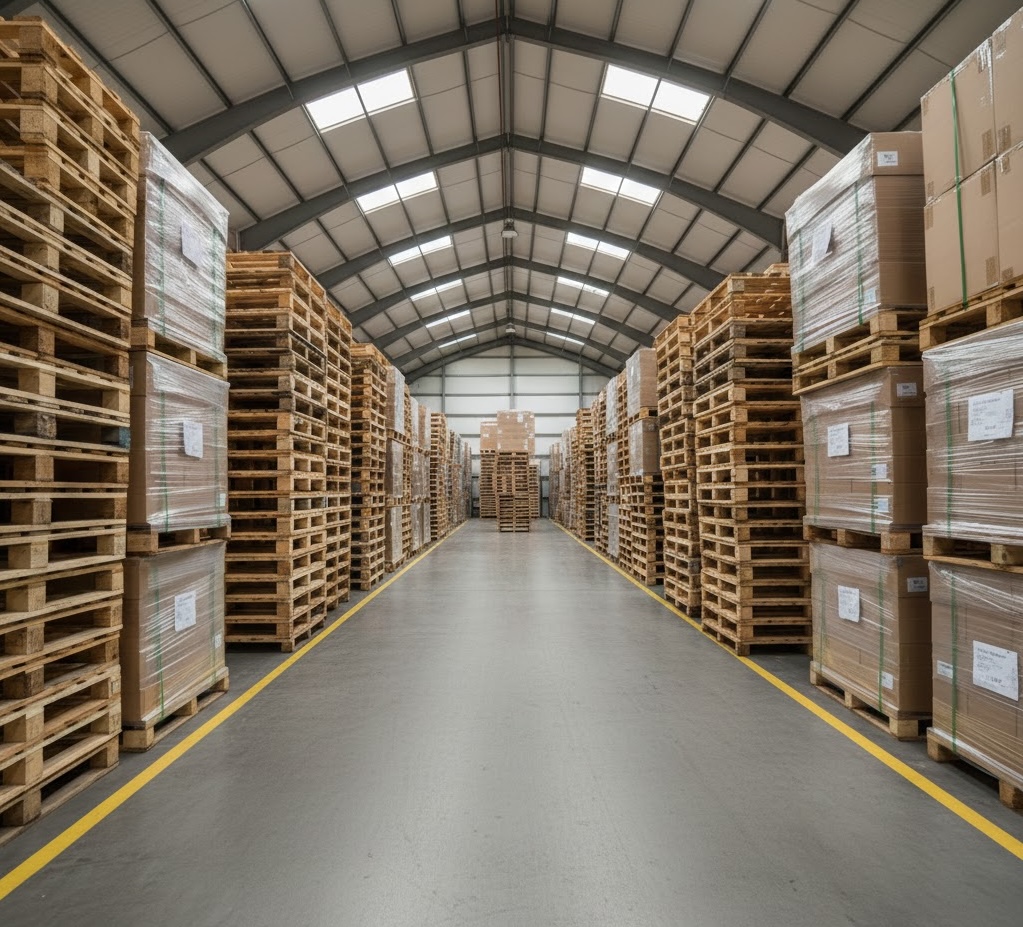
Wood pallets are the most widely used pallet type worldwide, accounting for over 90% of the pallet market. They offer an unbeatable combination of strength, affordability, and sustainability.
Key Advantages
- Cost-effective and widely available
- Strong and durable for heavy loads
- Easily repairable and recyclable
- Excellent friction for stable stacking
- Suitable for most applications
- Environmentally friendly and renewable
Wood Pallet Specifications
Best For
- General warehouse operations
- Shipping and transportation
- Manufacturing facilities
- Construction materials
- Agricultural products
- Retail distribution
Cost Effective
Wood pallets offer the best value for most applications, with lower initial costs and excellent longevity.
Sustainable
Wood is a renewable resource that can be recycled, repaired, or repurposed into mulch and biomass fuel.
Repairable
Damaged wood pallets can be easily repaired by replacing broken boards, extending their useful life.
The History of Wood Pallets
🕰️ The Early Days (1920s-1940s)
The modern pallet was invented in the 1920s when businesses needed a better way to move goods. The forklift, invented around the same time, made pallets essential for material handling.
During World War II, pallets became crucial for military logistics. The U.S. military moved ammunition, food, and supplies on wooden pallets, revolutionizing warfare logistics.
📦 Modern Era (1950s-Present)
After WWII, businesses adopted pallets for commercial use. By the 1960s, standardized pallet sizes emerged, with the 48"x40" becoming the North American standard.
Today, over 2 billion pallets are in circulation in the U.S. alone, with wood pallets accounting for approximately 90-95% of the market.
🌟 Interesting Facts About Wood Pallets
Wood Types: Hardwood vs. Softwood
Hardwood Pallets
Characteristics
Hardwoods come from deciduous trees that lose their leaves annually. Despite the name, some hardwoods are actually softer than certain softwoods - the classification refers to the tree type, not wood density.
- ✓Higher density (42-70 lbs/cubic foot)
- ✓Superior strength and durability
- ✓Longer lifespan (10+ years possible)
- ✓Better resistance to wear and damage
- ✓Ideal for heavy-duty applications
Best Uses
Automotive parts, machinery, metal products, exports (high load capacity), and applications requiring maximum durability and reusability.
Softwood Pallets
Characteristics
Softwoods come from coniferous (evergreen) trees. They grow faster than hardwoods, making them more abundant and cost-effective. Despite being "softer," they still provide excellent strength for most applications.
- ✓Lower density (25-40 lbs/cubic foot)
- ✓More affordable and readily available
- ✓Lighter weight for easier handling
- ✓Good strength for standard loads
- ✓Natural resistance to insects (cedar)
Best Uses
Food products, consumer goods, lightweight materials, single-use shipping, and general warehouse storage where maximum weight capacity isn't critical.
Pallet Maintenance & Care Guide
Proper maintenance can extend the life of your wood pallets by 2-3 years, saving you money and reducing waste. Follow these professional tips:
Regular Inspections
- • Inspect pallets monthly for damage
- • Check for protruding nails or splinters
- • Look for cracks in deck boards or stringers
- • Verify all boards are securely fastened
- • Remove damaged pallets from circulation
Proper Cleaning
- • Sweep off dirt and debris regularly
- • Use pressure washer for deep cleaning
- • Allow pallets to dry completely
- • Avoid harsh chemicals that damage wood
- • Clean spills immediately to prevent staining
Storage Best Practices
- • Store pallets in dry, covered areas
- • Stack no more than 5-6 pallets high
- • Keep off ground to prevent moisture damage
- • Rotate stock using FIFO method
- • Protect from direct sunlight and rain
Repair vs. Replace
- • Repair if damage is minor (1-2 boards)
- • Replace broken deck boards promptly
- • Reinforce with sister stringers if needed
- • Consider cost: repair if under 50% of new price
- • Dispose properly when beyond repair
💡Pro Tip: Extend Pallet Life by 50%
Implement a pallet pool system: designate specific pallets for light-duty, medium-duty, and heavy-duty applications. Using the right pallet for the right job significantly extends lifespan and reduces damage. Color-code pallets by duty level for easy identification.
Environmental Impact & Sustainability
Wood pallets are one of the most sustainable packaging options available. Here's why:
Renewable Resource
Lumber for pallets comes from sustainably managed forests. For every tree harvested, 2-3 new trees are planted. The pallet industry uses primarily fast-growing species.
High Recycling Rate
Over 95% of wooden pallets are recycled or repurposed. They can be repaired, ground into mulch, converted to biomass fuel, or used in manufactured wood products.
Circular Economy
Wood pallets participate in a true circular economy: use → repair → reuse → recycle → new products. This cycle can repeat multiple times before final disposal.
Carbon Footprint Comparison
* Based on lifecycle analysis including production, transportation, and disposal
Ready to Order Wood Pallets?
We stock a wide selection of hardwood and softwood pallets in various sizes and grades. Whether you need 10 or 10,000, we have the inventory and expertise to serve you.